
Ecodan Central Heating and Hot Water
Consider How Much Energy Your House Uses
This is a big subject to cover, and addressing it means that we will have to challenge the way things have always been done by giving detailed attention to areas we often overlook.
These areas include the effects of the day to day weather on a home and if the insulation levels of the home mean that the energy use is higher than necessary.
Among other factors such as location and orientation, good thermal insulation reduces the effect of the surrounding weather on a home. By keeping it cooler in summer and warmer in winter, the need for cooling and heating is reduced.
Consider What the Highest Consumers of Energy Are in Your Home
Current statistics show that the highest consumers of energy in New Zealand homes are hot water (38%) and home heating (36%) which combined account for 74% of your energy use.
Finding the most efficient way to generate your hot water and heating therefore is an important point of consideration.
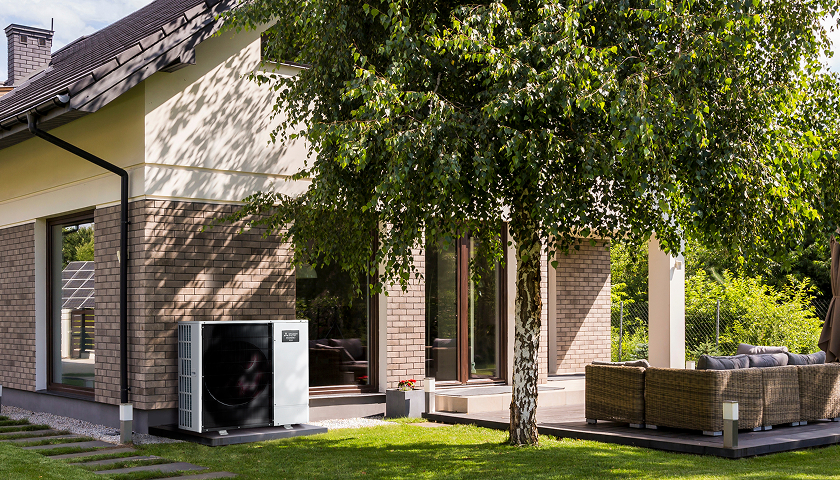
The Ecodan Range of air to water heat pumps are designed to deliver efficient, renewable heating and hot water for your home. Mitsubishi Electric are once again leading the way with the acclaimed Ecodan Range, bringing intelligent, high quality whole home heating to New Zealand.
Coefficient Of Performance
Within the industry for air to water heat pumps there is some choice on the market however the performance of the units can vary significantly. A commonly used measure is the Coefficient Of Performance (COP) which is simply the amount of electrical energy consumed compared to the system heat output. A heat source that is classed as renewable is a product that outputs at least 2.5 times the energy consumed.
For example, a COP of 1 : 2.5. A COP is a specific measure on a given day. So, if the outdoor ambient temperature is 15°C and the heat pump is putting a flow temperature of 35°C, it stands to reason that the COP on that day and time would read very differently to say an ambient temperature of 2°C and a flow temperature of 55°C. In this case the heat pump will need to work harder to pull heat from a colder ambient temperature and maintain a higher output.
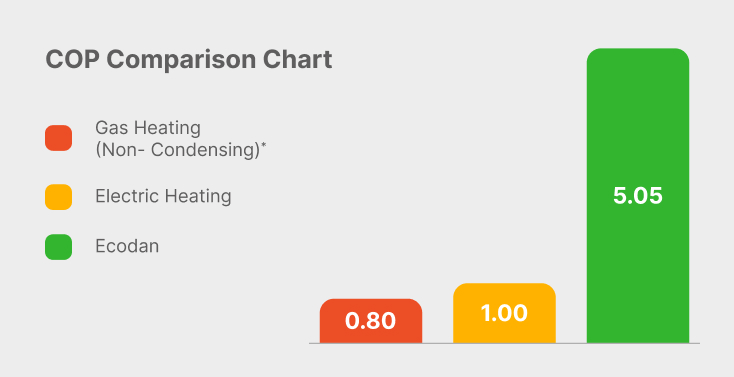
* Based on manufacturer information for gas instant hot water heater (non-condensing). Electric element heating assumed 1 to 1 efficiency.
Seasonal Coefficient Of Performance
What would be more accurate is a measure that rates the system seasonal performance known as Seasonal Coefficient Of Performance (SCOP), where the system is measured against year round outdoor ambient temperatures.
However, these figures can be hard to find, so how then can you make an educated choice for a system that will meet your client's needs? I would suggest that if manufacturers indicate that their systems are not suitable for colder areas of the country, or if they are reluctant to publish performance at low temperatures, then this is a good indication that their systems perform poorly in colder temperatures.
This means a back up immersion heater will have to be used, compromising system efficiency and therefore increasing environmental impact and run costs.
Simply put - not all heat pumps are the same. In some cases, the performance can be so poor that you would save your client's capital expenditure and run costs if you installed a gas central heating system.
The Mitsubishi Electric Solution
With a range of integrated products, Mitsubishi Electric will be bringing central heating and hot water solutions to our lineup. Our hot water cylinders are high quality products - pre-plumbed, pre-wired, low standing loss and using plate heat exchangers for high efficiency hot water generation.
The flow temperature controllers are the Fifth Generation (FTC5) Controllers, with unique self-learning settings for maximum efficiency, control and feedback with energy monitoring built in. All of course tied off with a single outdoor unit with the usual high efficiency and low noise you would expect from a Mitsubishi Electric unit.
Zubadan

New Generation Zubadan provides powerful heating in cold regions where most heat pumps lack in performance. Zubadan's rated heating capacity is maintained even in outdoor temperatures as low as -15°C, with guaranteed heating operation at -25°C outdoor temperature. That means Zubadan can be trusted to provide comfortable heating during severe winter months. Furthermore, faster tank heater times are achieved in low ambient temperatures compared to standard models temperature. Zubadan is available on our 8kW - 14kW models only.
Smart Energy Monitoring
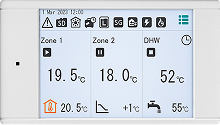
State of the art energy monitoring and management of the Ecodan Heat Pump System means families now have the visibility and freedom to efficiently manage their overall household power consumption for heating and hot water. Energy monitoring means households can now easily take advantage of off-peak tariffs, giving them the ability to save even more on their power bill.